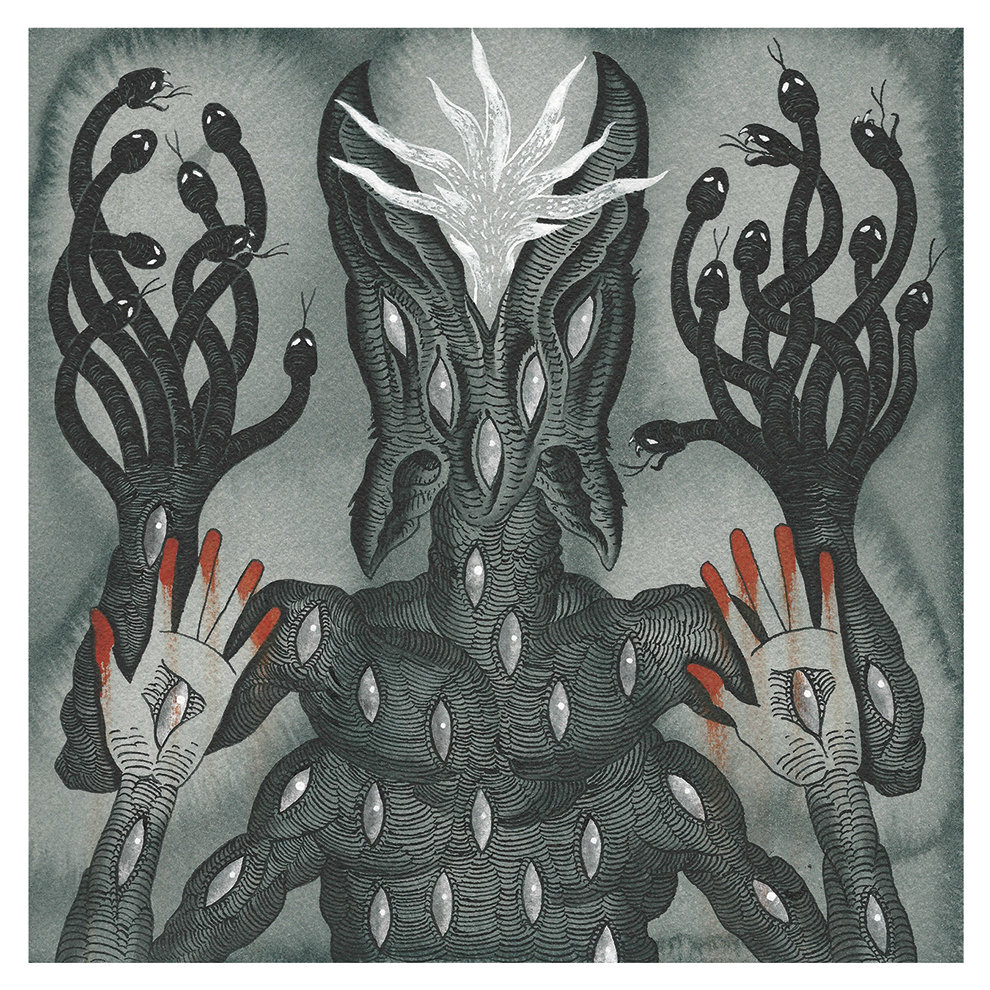
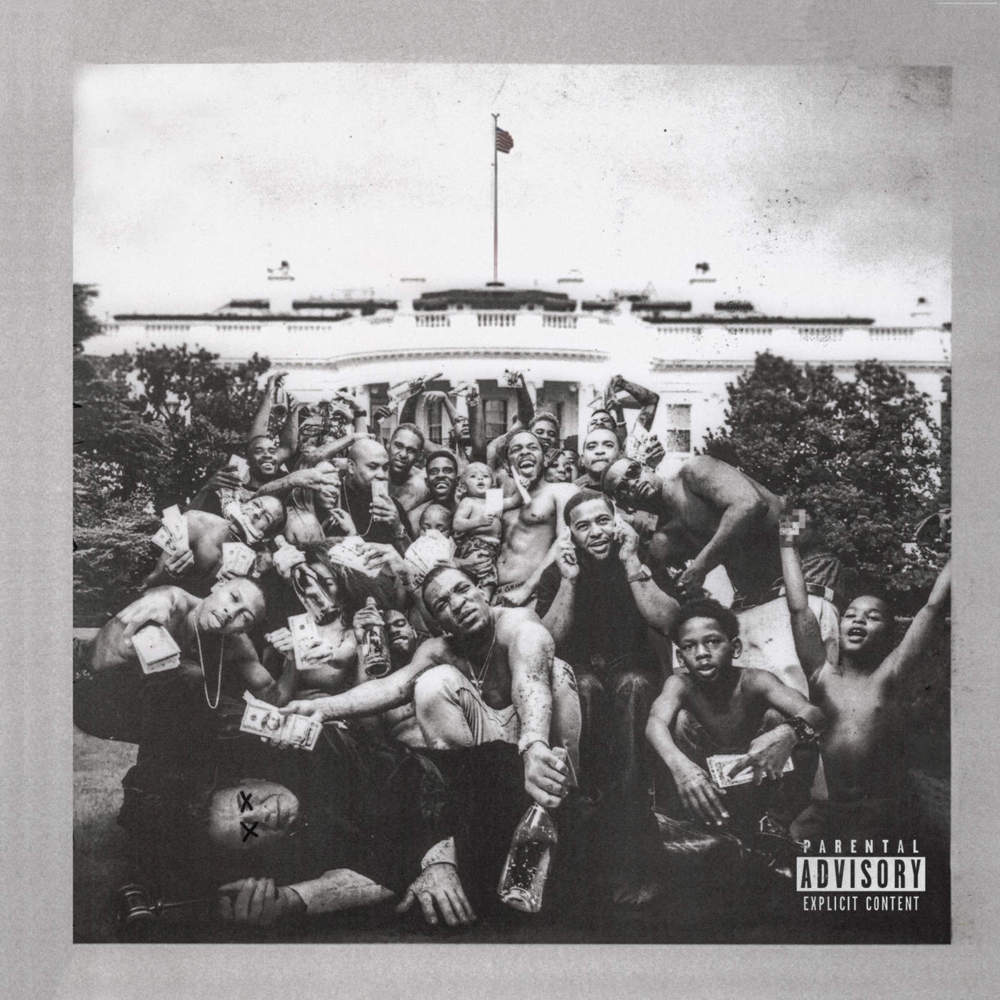
Grindcore/power-violence act Nails have established themselves as one of the premier groups in the genre with their first two releases, both of which have garnered a rather impressive amount of acclaim. They have a sound that is hard to explain to those who have yet to hear them, as their frantic, chaotic, straight to the point tracks normally fail to even exceed the one minute mark. Their punchy guitars, roaring drum beats, and nasty, guttural vocals all come in with such ferocity that they're over before you even have time to click play.
On You Will Never Be One Of Us, Nails do branch out in some ways, with Violence Is Forever coming in at a modest three and a half minutes, and the closer They Come Crawling Back taking up eight minutes of the 22 that the album runs for. Even on the longer cuts however, the band deliver the same kind of music you would find on their previous two efforts, and with Converge's Kurt Ballou behind the scenes producing yet again, you're all but guaranteed to find some of the ugliest sounding guitar riffs around. Frontman Todd Jones, who provides both the guitar work and the vocals for the band, doesn't shy away from experimenting with the same hardcore/metalcore territory that many of the bands Ballou has worked with in the past have, especially on tracks like the aforementioned They Come Crawling Back, which features some mathcore influenced, headbang worthy breakdowns and slow-paced drum beats that in turn build up into multiple chaotic interludes before the track comes chugging to a halt.
While the rest of the album isn't as patience testing as the 8 minute epic, it still delivers in plenty of other ways. The title track, which was released as the album's first single is another highlight, as the band kick off the album with monstrous blast beats that are delivered with such attitude and flair that you can't help but feel the music. They take a groovier approach on Made To Make You Fall, with an intro that in some ways is reminiscent of groove-metal pioneers Pantera, that is before the track descends into hell once again and the groovy instrumentation is swept away in favour of more bone-rattling guitar riffing and drumming.
When it comes to what sets this album apart and it makes such a great inclusion in their discography, I think it's simply just how well they manage the pacing of their songs. Not only does the band manage to make the most of even the shortest tracks, but they also seem to include everything imaginable within these tight timeframes. There are plenty of short, Converge-esque breakdowns and guitar passages, and just as many moments where the band create such an enveloping wall of sound that you truly become beat down by the brutality they are presenting you with.
In the time you've spent reading this review, you probably could have listened to this album in it's entirety, so that's where I'll leave this. Nails have yet to disappoint thus far into their career, and if you found yourself enjoying either of their last two full-lengths, this truly is a must hear. They aren't changing up their style, and they aren't looking to make any new fans, they're just taking the same style they've perfected with their last two efforts, and this time they're cranking it up even louder.
Rating: 4/5
Check out the title track You Will Never Be One Of Us below:
I find that the best way to describe Open Mike Eagle's approach to hip-hop as the type of rap that is enjoyed by men who wear scarves in the summertime and rap fans who also enjoy anime and Discovery channel documentaries. The Chicagoan emcee's blend of dry humour and intellectual lyricism with stories that present the irony of every day life never fail to provide both a laugh and some thoughtful discussion. Just last year with the release of his EP A Special Episode Of, Mike released one of the better rap projects of 2015 while only giving us about 20 minutes worth of material.
This time he's back with a lengthier project, and he's joined by producer Paul White, who is perhaps most know for his work with the always eccentric hip-hop artist Danny Brown. With Mike Eagle tackling topics such as technology, death, racial stereotyping and more, he still manages to stay as fresh and quirky as ever, and over the upbeat, childlike production of Paul White, the duo deliver an excitingly enjoyable hip-hop project.
It's hard to point a finger at exactly what makes this album work so well. Is it the varying production that swings between moments of being soulful and nostalgic to channeling inspiration from indie rock and 8bit video games, or is it the lyrics themselves that are among the most polished we've gotten from Mike thus far in his ten plus year career? Regardless, both contribute to the ever changing scape of Hella Personal Film Festival, and result in some fascinating moments. The track Check to Check for example, see's Mike explore the world of technology and our dependence on it. He states he's living "check to check" as he always finds himself in between checking some form of media. He constantly rides the line of lyrics that contain just as much humour as they do truth, and even at his silliest on cuts like Smiling where he claims to be avoided like a ghost fart because of his race, there still seem's to be a fair bit of sincerity in the lyrics. It's this mix of social inspection with Mike's tendency to poke fun at himself that grabs the listeners attention, and regardless of the instrumental backing him, remains the highlight of the project.
As the album progresses, the duo's consistency becomes highlighted as they deliver track after track that tells a story of it's own, both lyrically and instrumentally, and contributes to the overall theme of the album. That is, until the lackluster track Protectors of the Heat, which finds a tribal inspired instrumental with primarily loud percussion. It is also perhaps the only moment on the project where Mike seems to rely a little too heavily on a catchy chorus instead of delivering exciting, off the wall verses. Typically he presents just a simple couplet for the hook on these songs, and with their relatively short lengths (only Protectors of the Heat surpasses four minutes in length) it seems to fit quite well. Nonetheless, it doesn't take long for the two to get back on track and finish the album just as strong as they kicked it off. On Dive Bar Support Group we find Mike discussing both machoism and gentrification, while also dipping into themes such as alcoholism. It's a rather ambitious lyrical piece that showcases just what the emcee is capable of, and the sadness from the vocals seep into the poppy instrumental that backs him, making for one of the best tracks on the whole project. We see just how easily Mike can transition from deep topics to self satire on Drunk Dreaming, where he discusses just that, being drunk. The track is silly, fun, and lighthearted, an approach that these two seem to handle incredibly well on multiple occasions on this record.
When listening to this album it feels as if Paul White and Open Mike Eagle were a collaboration that needed to happen, despite it being a full-length album that I never expected us to get. The way the lyrics flow through the warm and fun production is a welcomed addition to Mike's always impressive approach, and helps make this a stand-out in both artists discography. To some it could seem a bit gimmicky, and that's fine. It isn't a project that everyone will get, nor will all rap fans enjoy, but to those of you who fall into the categories mentioned above, this is definitely a project worth checking out.
Rating: 3.5/5
Check out the track Check to Check below:
You can stream and download Hella Personal Film Festival over at Open Mike Eagle's BandCamp page here.
With what is easily one of my favourite album covers of the year thus far, the hip-hop trio Flatbush Zombies gave perhaps the most accurate look into the style of music they create. It's colourful, it's cartoony, and unlike the usual wavy, drugged out cloud rap you're used to hearing, while still containing many of the same elements. All three members, Zombie Juice, Meechy Darko, and Erick "Arc" Elliott bring their own unique style to every track the Zombies have recorded. Juice's spastic flow and high pitched vocals contrasts Meech's dark and dreary approach perfectly, and when met with Erick's phenomenal production it has resulted in two fantastic mixtapes with D.R.U.G.S in 2012 and BetterOffDead in 2013.
With all the hype and excitement surround Flatbush Zombies sound, as well as their participation in the "Beast Coast" movement alongside rap collective Pro Era and hip-hop duo The Underachievers, the release of their debut studio album has been something I've been anticipating for quite some time. Now, two years since their last release, the Clockwork Indigo EP which they released as a collaborative effort with The Underachievers, the long awaited full-length album 3001: A Laced Odyssey see's the light of day.
The confines of drug rap are pretty snug to begin with, in my opinion. While the Flatbush Zombies have always taken quite a bit of artistic freedom with their sound, lyrically they have never strayed too far from topics such as drugs, money, and spirituality. While I went into this project hoping to hear the group branch out a bit from the genre and try to tackle some more mature and creative subjects, the lyrical content instead stayed true to what the members have always done. It wasn't too big of a disappointment however, as Meech and Juice both delivered some of their best verses yet, and accompanied them with rather unique flows on tracks like the opening cut The Odyssey. It's a great choice to kick off the project, as it sets the tone without giving away too much of what's to come. The strong start continues with the third track R.I.P.C.D, which is the Zombies ode to the death of the CD as a media format. As always however, the lyrics tend to venture off topic and range from religion, to the state of rap music, and to drugs as well.
The album begins to really slow down for me about half way through, as there are a couple of throwaway moments that feel rather out of place in the context of the record. The two and a half minute cut Fly Away features a simple, straight forward piano beat and has Meechy Darko taking a soulful vocal approach throughout. It doesn't add much other than feeling like an unnecessary interlude, much like the actual interlude Smoke Break does as well. Perhaps Juice and Erick felt that if Meech got a chance to sing, they should as well, and I'm assuming that's how this track was born. It's their ode to marijuana, and is easily the corniest track on the record. It's one of the few outright skippable tracks that Flatbush has produced so far in their career, and the odd use of feedback on the vocals doesn't help to boost the track whatsoever.
Fortunately the two weak moments are rather short, and are broken up with two decent cuts. Ascension, the better of the two tracks that separate the interludes, features some flamboyant production and an incredibly in your face hook that features Meech claiming his goal is to be better than God. Trade-Off, the latter of the two is still an enjoyable cut, and the ambient influence found in the background during the first few moments of the beat is a rather impressive inclusion from Erick Elliott. Through the chorus the beat takes on a much harder edge, but fails to really connect as the production seems to be a little too thin and uninspired. That, accompanied with the laughable hook of "it's the work hard play hard, I just got a blow job" holds this track back from being all that memorable.
The record finishes off strong with cuts like New Phone, Who Dis? and This Is It which lead into the epic 13 minute closing track Your Favorite Rap Song which for the first six or so minutes definitely is my favourite cut from the album. The old school New York street influenced production is accompanied with the best pure rapping that the trio deliver on the project, and definitely brings the album to a solid finish. However, the biggest, and perhaps only problem I have with the song is the decision to include 5 minutes worth of fans praising the trio at the tail end of the track. It's something I only bothered listening to in complete perhaps once or twice, and while there were some funny moments, and I'm sure provided a cool moment for those featured, it just doesn't add anything to the project, except for making an overly long project even longer.
I've given this album a couple weeks now to change my thoughts, and unfortunately it hasn't been for the better. We get a couple stellar cuts, and a few others that are worth multiple listens, but ultimately 3001: A Laced Odyssey is bogged down by some of the least interesting moments I've heard the trio deliver. I could easily pick out four or five tracks that, without their inclusion would make the album much more enjoyable, but because of how much was forced into an album that got stale rather quickly, it just doesn't resonate with me the same way that the Zombies did on their two earlier mixtapes.
Florida based hip-hop emcee Denzel Curry has been a breath of fresh air in the rap scene ever since the release of his debut studio project Nostalgic 64 in 2013. On that project, we saw the artist blend aggressive, in your face trap inspired verses over some very spacey, dark, and surprisingly intricate production. His blend of cloud raps and gang related bars contributed to what was one of my favourite hip-hop projects of that year, and put him on the map as one of the better up and coming talents on the scene.
He followed up his debut album with the double EP 32 Zel/Planet Shrooms just last year. While this project was still quite enjoyable and showed off Denzel's growth, it was perhaps a bit too ambitious, as he spent the first half crafting some of his best trap inspired songs yet, but on the more laid back and drugged out second half, he delivered some of his most lackluster material to this point. It was made clear on that record that he's at his best when he's bringing loads of energy and raw, violent lyricism into the recording. So, with that being said, going into his newest project Imperial, I was hoping to see Curry take an approach more similar to that of Nostalgic 64.
While there are traces of older material on this new release here, it more so stands on it's own. We see a return to the southern hip-hop we've come to enjoy from Denzel, and he's certainly relying more on the trap influence than he is on the cloud raps. Nevertheless, he also looks to find his own style in terms of production, as we get rather wonky, spacey, trap influenced beats that are unlike anything you would find on his other releases. We also see a much more ambitious approach in terms of the guest features, as rather than bringing along past collaborators such as JK. The Rapper, Mike Dece, or Lil Ugly Mane, the former Raider Klan member instead enlists the help of some of the more popular hip-hop artists around, in the form of Rick Ross and Joey Bada$$. Not only is that an ambitious choice that is sure to bring Curry a bit more exposure, but it is also a risk that pays off extensively as both rappers deliver very solid verses without stealing the show. Knotty Head, the track that features Rick Ross is one of the moments of production that caught me off guard initially, thanks to the unorthodox sound of the synths and the transition into an old school 90's hip-hop beat during the last 20 or so seconds.
Lyrically we're seeing much of the same Curry we've come to know, as he discusses gang violence, drugs, racial issues, and things of the sort. It's not the meaning behind the emcee's lyrics that has made his music stand out however, and instead it's been the catchiness of his hooks and his always impressive flow. While his fantastic flow does carry over into this project, I feel personally that this record hosts some of his least flashy hooks that he's recorded. They aren't necessarily poorly written, but often times they feel a little too simplified and watered down when compared to past tracks like Parents, Threatz, or Zone 3, all of which were stand out takes on Nostalgic 64. There are quite a few decent hooks here nonetheless, Story No Title contains a fairly strong chorus, as does Pure Enough, a track that besides the hook, doesn't offer as much as most of the other tracks on the record.
This Life is a track worth noting as well, as it see's Denzel detailing a love interest as well as talking about his friends and the state of the world. He takes a much less aggressive approach for this track, but still manages to impress with lyricism that's a touch less over the top and anger driven. The real standout on this project though is easily ULT, the lead cut that opens the project with a bang and serves as a basis for Curry to showcase his vocal gift as quickly as possible. It's not the best production found on the album, but it's easily the most similar to his former body of work and definitely still stands out after multiple listens. That last track I want to point out is Zenith, which features Pro Era artist Joey Bada$$ and contains an instrumental that you'd be more apt to hear on a Joey project than one from Denzel Curry. Nonetheless, both rappers capitalize on the fantastic beat by delivering some great lyrics, which helps to bring some real life to the final few tracks of the project. While Knotty Head with Rick Ross was a solid track, and the laid back old school vibe of the closing cut If Tomorrow's Not Here stands out as well, it's Zenith that gives us the best track with a feature on the record. The meshing of Curry's southern influenced style and the New York origins of Joey Bada$$ makes for a fantastic collaboration, and something I'm hoping to see the two rappers do more of in the future.
There's quite a bit to take away from this project, and any fan of hip-hop music should enjoy it quite a bit. It certainly has shades of the same rapper who gave us Nostalgic 64and 32 Zel/Planet Shrooms, but it also see's new risks and a lot of aspects we've never seen from Denzel in the past. If anything, Imperial shows he's continuing to reinvent himself and mature as an artist, and no longer needs to rely on flashy, loud, bass driven production, and can instead carry a track on his own. It's not quite on par with his commercial debut, but it leaves a better impression than his last release for sure.
If you couldn't tell by the wordplay in his stage name, Nyck Caution (get it? NYC, like New York City) is a New York based emcee who has gained a fair bit of exposure in the past few years thanks to his work as part of the hip-hop ensemble Pro Era, a group that also houses the likes of Joey Bada$$, Kirk Knight, and CJ Fly among many others. Despite the plethora of gifted artists who belong to the collective, Nyck has always managed to stand out thanks to his slick flow and unique voice that always brought a nice change of pace whenever he would appear alongside his label mates on a track. With that being said however, much like many other of the emcees that occupy the Pro Era roster, he has been relatively quiet over the past few years, and it has really been Joey Bada$$ who has brought the group their popularity. That's not to say others haven't been releasing projects, as Kirk Knight's Late Knight Special was released just last October, and CJ Fly has a project of his own under his belt with Thee Way Eye See It. For Nyck however, he hasn't taken on a full project of his own since Pro Era's come up, and with his release Disguise the Limit, he's looking not only to make a statement, but also to remind those who had long forgotten about his impressive performances on other emcees projects' that he's still around.
If you're already tired of hearing me discuss Pro Era, then chances are this project won't be for you. Not only is it filled with guest verses and production credits from friends of Nyck's, but lyrically the record is cluttered with references to his peers as well. Most of these prove unnecessary and serve no purpose other than to remind those not familiar with Nyck that he is a member of the collective. While that's a rather minor issue, it unfortunately isn't the only problem I found with the lyrics on this thing.
One of Nyck's strongest suits when it came to his guest features in the past, were as I mentioned, his flow and his lyrics. However, when you get fourteen tracks that present almost the exact same formula of songwriting and subject matter, there isn't much room for surprises or anything impressive, as we've heard it all so many times before. Many tracks simply deal with his past or how skilled of a rapper he is, aside from the emotional Out of Reach that deals with the death of the late Capital Steez, who was also a member of Pro Era before his passing in 2012.
The beat selection throughout feels fairly mediocre in terms of what I've come to expect from a Pro Era project, which is rather surprising especially considering the production is handled by the likes of Kirk Knight and Chuck Strangers whoboth lend instrumentals to the record. For the most part, it feels as if there's an uncertainty of what style the project is going for, as we get the more traditional gritty New York street style beats at certain points, but also get a fair share of cloud rap instrumentals and at other times production that is rather alternative and unexpected. The Kirk Knight produced cut Wordsmith see's Nyck spitting over a dirty, distorted guitar instrumental, something that certainly stood out, but also could have been cleaned up a little bit as the guitar did sound rather rough around the edges and does distract from what's being said on the song. The track Church also see's a rather adventurous risk as the instrumental progresses from your traditional hip-hop beat into a electronic dubstep breakdown.
There's not much to discuss in terms of individual tracks or the lyricism, as everything on the project is competent, which may be the biggest problem I have with it. Everything feels the same, and while there were a few tracks that differ instrumentally, Nyck himself stays the same with his approach throughout. I still think he has a ton of skill, but his songwriting remains very raw and until he is able to prove he's more than just a rapper who can drop a nice feature on someone else's track, he will continue to fade to the back of Pro Era's line up.
Over the past few years, English born singer Charli XCX has become a household name within the world of pop music, thanks in part due to her collaborations with Iggy Azalea and Icona Pop and also with the release of her first two full-length albums. I was never blown away with the music Charli has released in the past, and for the most part all she offered was a fairly strong voice in terms of the pop realm, and lyrics that at times did stick in your head. With that being said, on her latest EP Vroom Vroom she looks to take a very different approach to her songwriting, and brings along talented producer SOPHIE to provide her with the suitable instrumentals.
SOPHIE, who just last year released his debut solo full-length Product has proven himself to be very gifted artist when it comes to creating wonky, unorthodox, catchy pop tracks and he furthers that with his work here. While the lyrics are rather catchy and are sure to please even those who are partial to traditional post-2010 radio pop, the real heart of the album is the club style production that is cranked full of loud bass, angry synths, and at certain moments some rather abrasive and in your face noises.
The project kicks off with the title track Vroom Vroom, a fast paced synth driven cut that houses some very loud drum work. The progression on the song is rather impressive as it switches back and forth from feeling like a club ready dance song during the verses, to highlighting Charli's vocal ability in a very radio friendly fashion on the chorus. Lyrically it introduces you to the same topics that are discussed throughout the other three tracks as well as they're simple, straightforward braggadocios lines that catch your attention during the hook and work together quite well with the production.
The second track Paradise carries an even quicker pace and contains some clear techno influence throughout. Bubblegum pop artist Hannah Diamond also makes an appearance on the track, and even with the inclusion of the sped up vocals that typically have me cringing over how similar they sound to Alvin and the Chipmunks fail to prevent me from enjoying this song. Up next is Trophy, a song that contains some more booming drums and an interesting vocal sample but plays to Charli's vocal ability quite well yet again. It's another moment where we find SOPHIE showcasing his ability to make a simple pop beat so much more, as we see many different passages and verses and the incorporation of a plethora of different sounds, something you wouldn't typically expect to find in your average pop tune. The closer Secret (Shh) is perhaps the most contradicting track on the album as it opens with rather ugly, noisy synth based production but transitions into a chorus that in many ways reminds me of a more well put together version of Iggy Azalea's Black Widow.
The chemistry between the two artists who created this project is shown in abundance on each and every track, and while it may not appeal to those who haven't at least found some enjoyment in either artists previous work, it is sure to please those who are already fans, or those who are interested in a wonky, unique bubblegum bass pop project. While incredibly short and to the point, this definitely puts the duo on my radar, and I hope to see them teaming up many more times in the near future.
Folk singer-songwriter M. Ward of both She & Him and Monsters of Folk fame has always managed to deliver his most impressive material by himself, in my opinion at least. During the span of what's now been an illustrious 15+ year career, he's managed, as a solo artist to avoid releasing anything less than an enjoyable record. On his newest project, his first under the M. Ward alias in four years, he looks to continue that streak while also incorporating many new elements into his traditional folk sound.
The pitter patter of rain pouring down in the (More Rain) intro leads us into the album's first real track, Pirate Dial which is one of the expected signature folk tracks. It features some fantastic layered acoustic guitar with the ambient sound of rain fall heard in the background. One of the most visceral and beautiful tracks on the album, the sparse instrumentation helps create a wonderful atmosphere while Ward's vocals contain just enough reverb to make the indie influence evident. He follows this track up with Time Won't Wait Up, a much more upbeat americana track that features multiple vocal tracks from Ward and his chanting of "do do do" almost evokes a certain doo-wop feeling, something that certainly is a new addition to his ever changing repertoire. This same feeling reoccurs on the track I'm Listening as well. It's one of the slower tracks on the album, and the enchantingly quiet guitar work in the background is met with Ward's whisper like vocals which help to deliver yet another impressive cut.
The album certainly does start off hot, but there are a fair share of not so impressive moments as well. A perfect example would be the fairly generic cut Confession, which fails to stand out thanks to the lack of lyrical substance and some of Ward's weaker guitar play on the album. Despite the intriguing electronic elements that comes with the use of a synthesizer, Girl From Conejo Valley also fails to make all too much of an impression, and at this point in the album it becomes clear that Ward is capitalizing a bit more on the slow-paced, atmospheric tracks than he is the upbeat, heavily instrumentally layered moments. Fortunately, there's no shortage of the slower tracks throughout, and they're covered with Ward's echoey, distant yet inviting vocal approach that causes you to feel if he's singing to you, rather than at you. At times, the album reveals a certain familiarity to fellow folk artists Father John Misty's work, yet with a much more serious and accessible tone.
At only 38 minutes in length, there's no need of the album overstaying it's welcome, and it's a good thing that was the approach taken. The layered vocals make for a nice change, but they're used in such an abundance throughout, that one or two more tracks tacked on at the end could have resulted in overkill. Instead we find a nice mix of a plethora of different instruments, ranging from horns, to violins, to moments where we actually get some rather loud and booming percussion. It's when Ward puts his focus into his trust guitar that we really hear something special though, and on a track like Phenomenon, a song that is closer to honky-tonk country than it folk, that we see why. When complimented with light use of an organ, a banjo, a bass, we see how much can be put into a track while still keeping it simple and precise.
The variety of genre influence and overarching introspective theme of More Rain makes it a welcomed addition to what is already a superb musical catalogue for the accomplished song writer. There are certainly some moments stronger than other, and it feels as if more effort went into a handful of tracks than did the rest of the album, but ultimately it doesn't stop the record from being enjoyable.
Rating: 3.5/5
You can listen to M. Ward's track Girl From Conejo Valley below:
The long awaited return album from iconic post-hardcore act Slint... oh wait a minute, that's right, it only sounds as if this album were recorded by Slint. Instead, Before A Million Universes is the second full-length release from New York based post-punk outfit Big Ups. While the four-piece band don't bother pulling any punches when it comes to showing off their influences on this record, they also look to incorporate just enough of their own sound to allow them to make this project their own.
Let me preface by saying that I personally consider Slint's Spiderland LPto be amongst the best post-hardcore albums released, and seeing a band influenced by them isn't anything new, nor do I consider it to be a bad thing. However, it becomes immediately evident on this project that it's preventing Big Ups from defining their own sound as not only are they borrowing the vocal style, but many of the guitar riffs also seemed to be pulled right out of Slint's playbook.
Throughout the album we see frontman Joe Galarraga uses the same lo fi, raw, loud vocals that Slint's Brian McMahan brought to the post-hardcore genre to help bring the sound from quiet, slowcore indie-rock to ruthless post-hardcore onslaught. Ultimately, Galarraga does quite well with the vocal transitions, but because they seem so familiar, and are already an integral part of a such a well-known act, it's hard to not imagine you're listening to someone else when you hear them.
The album's opener, Contain Myself is one of the better moments on the LP in my opinion, as Big Ups balance the Slint inspired spoken word quiet to loud vocal approach with some heavily distorted guitar play and a booming bass line that plays a huge role on this album. In fact, the group's prominent use of the bass guitar is easily my favorite element from this project, as I felt it was by far the most unique aspect of their sound. After we move past that track however, the album takes and more of a dive into the same borrowed elements I've already mentioned.
The latter half of Meet Where We Are, the fifth track on the record, see's the group make a bit of progress and leave the slowcore moments behind to instead deliver a crunching, hardcore influenced post-punk sound that proves they're capable of being more than a glorified cover band. Once again on this track, it's the bass guitar that not only makes for a fantastic groove, but also gives the band a very loud punk sound.
Unfortunately, these moments of more ruthless and angered post-punk are few and far between and instead the group dedicate most songs to following the same formula laid down by their predecessors. We do see more glimpses of their real punk side on tracks like the fast-paced chanty anthems Negative and Hope for Someone, but unfortunately about a minute in they both break down into more moments of Slint worship.
For some, the way the Big Ups chose to wear their influences on their sleeves may be an intriguing element, but personally I find the borrowing from other artists to be a little bit too heavy on this album to allow it to truly click. The album plays as a tribute rather than a unique listening experience, and while their is clearly potential with the group's musicianship and songwriting, it feels like they took a step backwards from their debut album with this one. There are a couple tracks worth hearing, and I can see myself coming back a few times because at the end of the day, it is an enjoyable record, but it fails to distinguish itself in any meaningful way which leads to dismiss Big Ups as a band who really need to discover their own sound.
Rating: 3/5
Listen to Big Ups National Parks below:
You can stream or download Before A Million Universes here.
It can easily be said that Macklemore has taken over as the face of pop rap over the last few years. Loved by the mainstream audience, but despised by many self proclaimed hip-hop heads, he's been put into a tough position because of his success. As an underground Seattle rapper, he released his fair share of projects, including his sole full-length album as a solo artist The Language of My Worldback in 2005. However, it wasn't until he met producer Ryan Lewis and the two decided to team-up that his career began to take off.
As a duo, the two independently released two EP's before their debut album The Heist hitstores in 2012. Packed full of decent production and fairly average pop rap rhymes, it was the subject matter of tracks like Same Love, and the catchiness and comedic punchlines of hits like Thrift Shop that helped the duo rise to the top of the charts. Of course it wasn't all smooth sailing for the duo however, as they received a fair bit of backlash from the rap community, especially when they were awarded the Grammy for rap album of the year in 2013 over Kendrick Lamar and his monumental release Good Kid MAAD City. The duo refused to let the lukewarm reception get to them though, and tracks like the new album This Unruly Mess's lead single Downtown made it clear they weren't prepared to back away from the pop sound anytime soon. That eventually became an afterthought however, as last month with the release of the album's second single White Privilege II, Macklemore took on a very important topic, and despite early criticism from your's truly, I've grown to enjoy the track quite a bit and respect it not only for it's relevancy, but also for what Macklemore offers lyrically.
Even with one solid single, I still went into this album expecting to be disappointed by sugary pop hooks and cringe worthy attempts at musical comedy. Nonetheless, I felt the need to give it the time of day, and astonishingly, I ended up being quite impressed.
The album kicks things off with one of the best lyrical displays Macklemore has offered thus far in his career, as Light Tunnels see's the Seattle emcee detail his experience at the Grammy awards and his thoughts during his upset win for rap album of the year. We also get a peak into the mind of the rapper, as he mentions how insecure and uncomfortable the award made him, as well as how much he began to doubt his skill after the criticism he received. Lines like "I don't like who I am in this environment, I forgot what this art's for" help reinforce what he explains throughout many of the albums deeper moments, which is that he cares about hip-hop and can offer more than just being "another white radio rapper." The song's chorus, sung by Mike Slap is the same generic pop hook I've come to expect from Macklemore, but it isn't enough to stop me from enjoying this track, as the introspective bars have me actually caring about what the emcee is saying, something that very rarely happened on his last album.
Other deep cuts like the aforementioned White Privilege II which serves as the closer, and Kevin a track that features Leon Bridges and details the overdose of one of Macklemore's childhood friend's, show us a much more honest, down to earth conscious hip-hop side of the duo that I didn't expect to find on this record. In the past, with songs like Same Love, I've felt like Macklemore was simply using current world issues for his own gain, and while I'm not necessarily convinced that wasn't the case in the past, I don't feel that way with these cuts on Unruly Mess,because there's a touch of sincerity, and it feels like there's something to prove with each line delivered.
It's not all positives on the album though, and that same cheesy mainstream pop culture artist who we've come to know appears multiple times on the album. Downtown is an obvious example of that style, but we get tracks like Brad Pitt's Cousin, Dance Off, and Let's Eat as well which see rather lackluster punch lines and weak attempts to brag. I struggle to take Macklemore serious when he takes a braggadocios lyrical approach, and the overly radio friendly production doesn't do much to elevate the tracks either. There are however, a handful of cuts that sit somewhere between those that are self reflective and the others that are drenched in pop influence. Buckshot, a cut that features New York hip-hop veteran KRS-One and iconic producer DJ Premier centres around Macklemore's experience with graffiti art, something that any one familiar with KRS-One will know he also is well versed in. It's a very enjoyable track, and sits on the fun side without relying on too clean of a chorus or too much pop influence. The indie-rock flavored instrumental on St. Ides is another one of the album's highlights, as the lyrics reflect on Macklemore's history of alcohol abuse. The twangy guitar featured on the track helps make it one of the better beats throughout the project as well.
I've breezed over White Privilege II a few times already throughout this review, but I feel like it's important to address the track a bit further. The song of course discusses the black lives matter movement and the ongoing struggle between black youth and police officers in the United States. Macklemore mentions the silence he and many other white artists have resorted to while the incidents continue to occur, and he also reflects on the hip-hop culture and those who consider him to have "stolen the sound" for his own gain. I have already said I was dismissive of the song at first listen, but since I've come to respect the emcee more, not for making a track on something important, but as serving as the connection between what's occurring and a mainstream audience. No, you shouldn't feel sympathy for Macklemore when hearing this track, but it's purpose is instead to inspire those who have set in silence and have remained uninvolved with protests and demonstrations to stand-up and be heard. Regardless of your opinions on the matter, it's a track that warrants a listen for the power behind the message alone, and the lyrical display from a man who prior to this track was nothing more than a boring pop rapper, at least in my opinion.
The best moments on This Unruly Mess I've Made are easily the best that the duo have offered since they began teaming up, and I'm very impressed with what they've done throughout the LP. Unfortunately, there are still a handful of tracks that feel phoned in, as if the sole reason they were included was to appeal to a more a mainstream audience, and that hurts the album quite a bit. Nevertheless, my opinion on Macklemore and Ryan Lewis has been altered quite a bit, and I now see a lot more potential in their sound. If they can trim out some of the more uninspired moments in the future, Macklemore will have plenty more award shows to write about.
Rating: 3.5/5
You can listen to Macklemore and Ryan Lewis' White Privilege II below:
Daydream Society is the solo project of Fort Wayne, Indiana based ambient musician Bryan Mullins. He first caught my ear with his 2015 release: For Now, a very impressive record that saw him use a traditional synth based sound to create some very uniquely lush soundscapes as well as some spectacularly vivid imagery. He released the follow-up to that project, Avulsion, this past January, and while it stayed true to that same sound found on For Now, it also saw him dig a bit deeper as an artist as he tried to define his stylistic direction a bit further.
If one thing can be said about both of the last two projects, it's how much I found the music correlated with the album art. The brightly lit neon city that graces the cover of For Now matches the vibrant synths of the album perfectly, and often times the music itself provoked the feeling of walking down a brightly lit city street on a dark rainy night. Meanwhile, the artwork for Avulsion is quite different, yet the wintery forest that you are presented with on the cover still manages to connect with the music quite well, as this time the sound is more of a warm blanket, enveloping you much like the bright sun that can be seen peaking through the aforementioned trees does to the forest.
So, what about the newest album, Fervor? This one was hard to get a read from by simply looking at the album art, but after hearing the first few songs, it becomes immensely clear what the artistic direction is. The project, which Bryan himself referred to as being "an album about love, without using any lyrics" is the darkest I've heard him get. The angry, dirty distortion on tracks like Daring to Deceive You and Fate or Fiction Pt. 2 feel both loud and abrasive when contrasting the hauntingly beautiful synths that occupy most of the other tracks, however when set against the backdrop of the shadows and darkness of the album's cover, it all seems to make complete sense.
While he has classified his previous projects as experimental, it wasn't until Fervor that I felt the tag truly belonged. The closing track The Best Dream of Your Life, a cut that comes in at nearly 7 minutes long, is a wonderful example of that. The extra slow pacing of the piece is wonderful, and while it's kicked off with the same buzzing atmosphere that you might expect, it's as the track progresses that we find surprises such as the ugly keys which manage to still boarder on being pretty in their own eccentric way. When that's mixed in with what appears to be a very sci-fi inspired sound, it creates one of my favorite tracks on the entire album. It was an ambitious decision to venture further into experimental territory, but fortunately the plethora of new sounds included on this record don't interfere with the same atmospheric nature that can be found on the rest of Daydream Society's projects. Even with some moments being more out there and unpredictable, the project as a whole remains very coherent and has it's own unique identity without alienating any of the elements found on older material.
This is certainly the most ambitious Daydream Society album I've heard, and for each second of beauty and love, there's also a moment of sadness and despair, but after all, isn't that what love is? In many ways, I consider an ambient piece to be much like surrealism is in art. You may not be able to hear or feel exactly what the artist was thinking when creating it, but each listener will have their own interpretation of what's beneath the surface. For me, Fervor is a journey for both love and lust, a journey that has ups and down, and is equal parts alluring as it is tragic. Is Fervor Mullins' best project? Perhaps not, but it certainly is on par with the rest of his works. What it truly is however, is a sign of musical maturity and further development of what was already an incredible approach.
Rating: 4/5
You'll be able to download or stream Fervor on March 1st, overon Daydream Society's bandcamp pagehere. In the meantime, head over and check out some of his other material.
For those not familiar with Entropia, they are a Polish post/black/experimental metal outfit who really hadn't crept onto my radar until the release of this LP here; Ufonaut. With that being said, the fusion of black metal and post metal, also known as blackgaze, has been one of my favorite metal sub genres over the past few years, and it has led me to a handful of fantastic releases from the likes of Deafheaven, Ghostbath, and Harakiri for the Sky. So, when going into this album, I clearly had high expectations. Fortunately for myself, and any other fan of this genre, Entropia delivered in quite impressive fashion.
On Ufonaut, the band encompasses a traditional black metal style as means to create a basis or outlining sound for their music, but it's their ability to take influence from other subgenres and incorporate them throughout that really adds the extra substance to this project. The opening track Fractal is a great example of that, as the opening 45 seconds or so, see's the band weaving in and out between a much more traditional black metal guitar riff and some Mastodon-esque sludgy, slow paced guitar stylings. As the track progresses, we also see the band incorporate the use of an organ which helps contribute to the very haunting nature of the song. As it comes to end, horns are introduced, which really allow for the group to build a fantastic crescendo to what is easily one of the best moments on the entire LP.
From there, you find much more of that same risk taking and genre bending formula as the album proceeds. Songs like the title track Ufonaut see the band experiment with some slower, cleaner guitar tones in between heavy, hard hitting moments, while both Mandala and Paradox are used to showcase the group's more experimental side, as they use variations of middle eastern instruments to help create some intricate, folkish instrumental passages. The record's closing cut, Veritas is also worth mentioning, as it's the longest track on the record and also perhaps the loudest. It finishes the album off with a fantastic climax, thanks to the final minute of the track which is full of in your face, wretched, ugly screams that really help drive their sound into your head like a car with no breaks smashing into the side of a burning building (that was seriously the best analogy I had.)
Aside from Veritas however, the vocals do, at certain moments at least, tend to come off as rather gimmicky and annoying. It's not so much the vocalist himself, (who goes by the stage name of U, as each one of the band members is named after a letter from the word Ultra,) but it's the production choices. Like on the aforementioned opening track Fractal for example, we find a blowing, wind-like noise appearing seemingly every time U opens his mouth, and then as the album continues, the vocals become coated with an echo effect that would make you assume the band recorded the frontman while he was screeching in a dark, empty cave. And while typically that might be a positive on a black metal project, this isn't your ordinary record, and the rest of the production is rather clean and lively in comparison to the raw, lo-fi nature of the vocals.
With that being said, the vocals only appear on perhaps a third or so of the album, and the focus clearly lays on the instrumentation, which is of course consistently fantastic, so it doesn't interrupt my enjoyment all that much. There really isn't anything on this album that doesn't deliver in a unique and intriguing fashion. It's certainly heavy enough to welcome any fans of more traditional black metal acts, but it also keeps you guessing by firing post-metal inspired passages at you on nearly every single track. A great addition to the Polish black-metal scene, and a fantastic statement for all blackgaze bands around, Entropia delivered a very nice LP.
All in all, I'm giving Ufonaut a 4/5.
Let me know down in the comment section, have you heard the album? If so, what'd you think?
Listen to Fractal, the second single released from the album down below:
You can download or stream the album over on Entropia's bandcamp page here.
Power-violence/grindcore outfit Magrudergrind rose to prominence back in 2009 with the release of their self-titled second full-length album. It was a project that brought fans and critics alike together with immense praise and respect for the groups ability to combine brutally crafted grindcore and power-violence with the use of vocal sound clips and many different stylistic influences. They have continuously managed to impress with their ferocity and hardcore aesthetics while also improving between each release since their inception back in 2002.
Following the release of their 2010 EP Crusher, the band dropped off the radar, and despite a couple of public appearances and reissues of former material, have left fans disappointed with their lack of output. The politically charged trio are back this year however, and with Converge's Kurt Ballou handling the engineering duties once again, Magrudergrind are looking to pick up where they left off and wreak havoc on any and all potential listeners.
What hasn't been done already within extreme music? There isn't much an act can do to be any louder or more chaotic than the music that came before it. In the case of Magrudergrind, they instead look to incorporate moments, like one found on the second track Divine Dictation, where the guitar playing slows down to a chugging pace momentarily, serving as a hardcore punk influenced break from the ferocity, something that reoccurs throughout the LP. With that being said, it's primarily earth shaking blast-beats, punk oriented guitar riffs, and blood curdling vocals that provide the barbaric nature of the music on II.
The biggest change from the band's last full-length to this one, is the disappearance of the sound clips, which were one of the defining factors on their previous releases for me personally. They take advantage of the extra time allotted from the decision to leave out any vocal samples by instead delivering 24 minutes of unrelenting force. It's that same bloodthirsty savagery that has garnered so many comparisons to British grindcore originators Napalm Death. While the band has been around for 30+ years and continues to put out fantastic material (see their Apex Predator - Easy Meat album released last year for any needed proof) they are getting older, and it appears that Magrudergrind may just be the right act to inherit the title of the biggest grindcore act.
The music that the American extreme outfit is crafting isn't necessarily for everyone, but it definitely serves it's purpose. For anyone who enjoys the kind of music that is guaranteed to make your ears bleed and turn you into a weeping mess of a human, this LP is a goldmine.
Rating: 4/5
Check out the track Sacrificial Hire from the new album below:
You can download the album at Magrudergrind's bandcamp page here.
Underground Chicago based rappers Chris Crack and Vic Spencer have both been putting together some very solid projects within the underground hip-hop scene for quite sometime now. They are frequent collaborators, and on Who the Fuck is Chris Spencer? they deliver their first full-length album has a collective. While Vic Spencer is perhaps best known as the guy who exchanged diss tracks with fellow up and coming Chicago emcee Mick Jenkins late last year, he, as well as Crack, are both also known as on the rise hip-hop artists who are looking to use this release as a stepping stone to the next level of popularity.
The album is presented as a concept project, an introduction to Chris Spencer, as the project's title implies, and while you do learn that he's a wise cracking, beyond confident man who has no problem speaking highly of himself, that's about as far as the duo manage to take it. Their lyricsm isn't bad, and there are a plethora of clever lines that still cause me to chuckle after multiple listens. The best example of the quick-witted song-writing comes on the cut Ice Cubes when Vic Spencer spits the line "y'all get an A+ for sucking balls." It's simple, straight forward lines like this that the two specialize with, and when it's combined with the 90's inspired production of the album, it works quite well.
The downside, however, is that the production isn't always all that impressive. Instrumentals like the vocal sample driven beat of Zebra Ave or the strange synth based production found on The New Information aren't able to be redeemed by the rapping, because the two rely on their ability to ride the beat so heavily that when using an unimpressive instrumental, they end up failing to deliver. With that being said, there are also tracks where the samples are extremely well done and the beats help propel Spencer and Crack to a much higher level then they'd otherwise be on. Spencer has proven himself as talented behind the boards, and assuming he handled those duties on this project as well, he certainly came through with some of the best production I've heard from him on the album's better cuts.
As I mentioned, the two were clearly influenced by 90's hip-hop as the jazz based sampling and laid back flows are the driving force throughout. No Biggie is an exception of that rule, as the trap flavoured song features some hard-hitting bass and an aggressive flow from the two Chicago natives. At no point do they look to bring anything new or unique to the table, and that is perhaps just a byproduct of drawing as much inspiration as they do from the past.
Any fan of either of the two gifted emcees' should take the time to check this one out, and those not acquainted will find this to be an easy way of being introduced. Who truly is Chris Spencer? He's not anyone exciting or innovative, but when he's firing on all cylinders, he makes some truly enjoyable hip-hop tracks.
Favorite Tracks: Cue Ball, No Biggie, Drunken Monkee Least Favorite Tracks: Zebra Ave, The New Information
Sludge metal has always been more of a style than a genre, with it's down-tuned, methodical, swampy guitar play featured prominently alongside booming drums and vocals that can range anywhere from wretched screams to warm and welcoming serenades. It's certain that you never know exactly what to expect going into an album with the label "sludge metal," aside from the fact that it will hit you hard and it won't quit until you're done listening.
Not only does the Californian based five-piece Seven Sisters of Sleep (SSOS) embrace the sludge metal mantra, but they also use it as a stepping stone, a method of inspiration only to explore even darker and heavier depths of the metal world. The music found on Ezekiel's Hags can't be lumped into any modern genre, and trying to define it simply isn't a possibility. The band isn't looking to show their musical influences, or give you an idea of what they're trying to make, instead they're looking to engage in a complete onslaught of gigantic proportions as they envelop the listener in a cloud of raw, dirty, unrelenting musical horror.
As soon as the lightning fast blast-beats and Converge-esque screeches of the opening track Jones explode onto the album, the pace of the record is set. At only two minutes in length, you'd believe SSOS would rely on short, frantic, organized chaos to carry the momentum on their first release in three years. Instead, however, we see the band tackle multiple cuts of over five minutes, even seeing the closing track Bastard Son come in at over ten minutes. Just as easily as the band can hit you over the head with a hammer and bring your misery to an end, they can also tie you up and drag you along, stretching the brutality to twice or even three times the expected lengths while still finding new ways to keep you invested.
Even deadlier than the group's incorporation of such a varied list of genres (death, doom, and black metal as well as hardcore and grindcore, to name a few) is their ability to do so at the drop of a dime. One minute you're getting lost in the chugging guitar riffs of Plateau or Third Season, and then next thing you know, the vigorous drumming on Brother's River or the ear-splitting vocals and grindcore outro of Sacred Prostitute shakes you from your core. The album is equally technical and beautifully composed as it is ruthless and sadistic, perhaps that's exactly what Seven Sister's are aiming to do.
Favorite Tracks: Jones, Denounce, Gutter, Sacred Prostitute, Ud-Nun, Bastard Son Least Favorite Tracks: None Rating: 3.5/5
If there's one thing that can be said about Future, it's that he's among the most frequent releasers in the hip-hop scene. Since 2012, he's released three full-length albums and eight mixtapes alongside a plethora of singles and guest features. With all these releases coming so frequent, the Atlanta born emcee has proven his consistency, but is also beginning to border on overstaying his welcome. Now, just over six months since releasing what is easily is best project thus far in his career, DS2, Future is releasing EVOL, his fourth LP.
Less than a month ago Future released his Purple Reign mixtape, and the general consensus on the release was that the trap artist needed to slow down on his musical output. Too much of a good thing can be a bad thing, and because of the lack of diversity in Future's sound, and for the most part, the trap genre itself, there's nothing new being brought to the table. On EVOL, it's much of the same we've already heard. Albeit there's much less filler and throwaway tracks than Purple Reign, but even the best tracks on EVOL fall short of what the rapper is truly capable of.
The unfortunate byproduct of releasing an album the caliber of DS2, is the heightened expectations that come alongside the success. With so much music being released, he's smothering his listeners with subpar material instead of giving us the quality we know that he's capable of making. Some of the tracks on EVOL are catchy trap anthems that are worth a listen. Cuts like Maybach and Xanny Family are both incredibly catchy and certainly contain some replay value. The problem is that plenty of the other tracks fail to differentiate themselves from anything else found on his other material, and despite being an album, the project doesn't have the feeling of being any more than another mixtape.
The track listing also gives us some completely obnoxious tracks, and Lie to Me is the first one that comes to mind. The spacey-synth based instrumental is way too busy and distracting thanks to the heavy bass line that feels as if it's been turned up way too high, making for what is overall some messy production. The lyrics aren't much better, although no one should go into a Future record looking for in-depth or impressive lyricism. Program is the only cut that rivals Lie to Me for the least enjoyable on this project, as the fact that every line ends with "program" drives me insane due to the lack creativity lyrically.
Future turns it around with the following cut Low Life, that features The Weeknd, straight off of the success of his latest album Beauty Behind the Madness. It's by far the longest track found on EVOL, clocking in at over five minutes, but still managing to remain interesting. The album finishes with Fly Shit Only, a song that features one of the most impressive beats I've heard Future use since DS2, as there's some piano, some electric guitar, and even some distorted, glitchy noise to be found within the instrumental.
Ultimately Future came up a little short on his latest effort, but EVOL is still nothing to scoff at. There's some entertaining tracks, and some not-so-enjoyable moments as well. If there's one thing to take away from the album however, it's that Future continues to prove that he needs to slow down on his releases. Quality over quantity is what his fans are looking for, and while his frequent output is very impressive, it's leading to more lacklustre songs than necessary.
It's worth noting that fellow Atlanta, Georgia based rapper Young Thug also released a project this past Friday, and has been quite vocal about his issues with Future in the past. To find out my thoughts on Thug's latest, make sure to subscribe to the blog or follow me on Google+ as I will be reviewing I'm Up soon!
As hard as it might be to remember, there once was a time when Wiz Khalifa was an up and coming hip-hop artist putting out some very interesting stoner rap. His laid back flows, wavy beat selection, and clever yet simplistic wordplay helped allow him to put out some great mixtapes such as Prince of the City, Burn After Reading, and Kush & Orange Juice. As his popularity grew however, the apparent amount of thought and effort that went into his songwriting began to diminish, and after the release of his third full-length album Rolling Papers, it was clear he was heading in a new direction stylistically. Now, with plenty more popularity and a couple big name awards under his belt, Wiz has delivered Khalifa, his sixth full-length release. Former fans of the Pittsburgh born emcee will probably go into this album hoping for a return to the rapper's former ways, unfortunately, they will end up sorrily disappointed.
Not only is Khalifa the worst album Wiz has put out this far in his career, it's also one of the worst rap album's I've heard in a very long time. The album, summed up as quickly as possible, is 13 tracks with absolutely zero effort, featuring generic production, an overuse of overdubbed vocals and echo effects, boring lyricism, and the Taylor Gang leader attempting to say "I smoke weed" as many times as he possibly can on an album before driving the listener insane. Lines like "my chain shit on your car, my rolex fucked your bitch" on Celebrate, or "gettin' all this paper, got me shittin' in public" two tracks later on City View are beyond cringe worthy. Not even the instrumentals, done mostly by fairly talented producers like frequent Khalifa collaborators Big Jerm, SAP, and Sledgren can help save any tracks on this LP, as most beats feel generic and boring, not even seeming good enough to be filler on an older project of his.
The album is 52 minutes yet feels like a lifetime, with guest features throughout adding nothing more than perhaps an appearance on the chorus or a lacklustre short verse. The only decent features comes on the one tolerable cut on the record, as No Permission features fellow Taylor Gang records label mate Chevy Woods. The instrumental, which is easily the most reminiscent of Wiz's past material on the album, is fairly average, and he appears to at least be attempting to put in an effort lyrically on this track. The biggest issue with the album for me, if it isn't clear yet, is that it's obvious Wiz isn't trying, coming through as a shell of himself even on his other commercial releases. While projects like Rolling Papers and O.N.I.F.C weren't great by any stretch, they at least felt like radio-bait, whereas Khalifa doesn't even seem to be enjoyable enough for the radio. It's not catchy, unique, creative, or anything else that could possibly be seen as a positive quality.
On Zoney, one of the later tracks in the listings, Wiz even brings his son Sebastian onto the album as perhaps some attempt to create a cute moment, but that's the last thing needed on a rap album. The only thing it serves to do is help the listener forget the lyrics earlier on the track, which are among the worst found in the listing. It did garner a smile from me though, because it became evident at this point how heavy Wiz was reaching, just looking to fill-up time and tracks as needed.
I'll be completely honest and admit that I'm not much of a fan of commercial radio rap. With that being said, the pop-rap elements aren't even what makes this album so unbearably bad. There's nothing appealing to be found anywhere near this album aside from maybe one or two tracks that are just a little bit above the horrendous standards the rest of the album sets. I'm not going to ramble on about just how poor this project is, or how far Wiz Khalifa, a once at least somewhat talented emcee has fallen off. Instead, I'll just leave by recommending you stay as far away from this album, or any song found on it for that matter, as possible.
Favorite Tracks: If I have to choose, No Permission is at least better than the other songs found on this trash heap.
I'm not even going to attach a video from the album below, instead listen to Never Been, a track from back when Wiz made enjoyable stoner rap.
Least Favorite Tracks: BTS, Celebrate, Elevated, City View, Call Waiting, Zoney Rating: 1/5
Yes that's right, one, as in the same number of songs that I can actually ever potentially see myself considering coming back to on this album.
Have you listened to the album yet? If so, let me know your thoughts in the comments section down below!
When Jazz Cartier claims "everybody in the States compares me to Drake, cause not many in the city can carry the weight" on the song Talk of the Town, he delivers an interesting perspective of what's to come on the follow-up to his debut album Marauding in Paradise that was released back in April of last year. Not only does Jazz share Drake's hometown of Toronto, Ontario, but he also shares a similar sound to that of the OVO member, as just like Drizzy is known for his ability to to craft fantastic party anthems over a plethora of beats, Jazz once again proves he's capable of the same on Hotel Paranoia.
Coming in at 16 tracks, Hotel Paranoia is quite an ambitious effort from the Canadian emcee, but if one things for sure, Cartier never shies away from taking risks. Whether it be through his boastful lyrics or his seemingly ever-changing beat selection, which while often trap flavoured, seems to also incorporate influences from many other genres as well. Even with the diversity though, 16 trap songs is a lot to digest, but could the up and coming hip-hop artist step-up and deliver yet again?
The aforementioned opening track Talk of the Town is exactly the way a project should open, Jazz is bold, he's energetic, and ultimately he introduces his listeners of what's to come. That is, until the outro of the song begins, and a skit between himself and an apparent worker from the "hotel paranoia" plays out. I didn't go into this mixtape expecting a concept project, but when one presents a skit of the sorts, and even finishes it with Jazz asking the employee if she can inform him when his friend arrives, as well as asking where the elevator is. The concept seemingly disappears after that track however, and the only true reoccurrence is when the albums sole guest appearance, coming from River Tiber, appears later on in track listing. Once again though, the cut has no clear connection to anything else in the project, so the skit is a somewhat questionable inclusion on the album.
The album almost appears to be divided into halves, as the first ten or so tracks are the expected hard hitting trap beats with Jazz dropping one liners and braggadocios statements. It changes up with After The Club however, as the subject matter becomes the relationship between the Toronto native and a love interest. The change in pace is reversed however, as Tales, the fifteenth track in the listing brings back the style found in the first ten cuts. The track pacing is interesting, but in some ways makes the project feel convoluted.
The project's closer, Save Me From Myself, is one of the most eccentric cuts I've heard from Jazz, as he delivers his first verse in a raw, almost demented vocal style. It's easily one of the most intriguing cuts found on the album, alongside How We Do It, a track that samples the Montell Jordan song by the same name. Not only is the use of the sample fairly interesting in it's own right, the song is the trap anthem you can expect to hear when you tune in to a Jazz Cartier project.
The album definitely flips back and forth, with a share of generic trap cuts that don't add much to the overall experience, but also quite a few enjoyable cuts that display lyrical skill as well as a strong ability to craft catchy hooks. If the goal with this release was to separate himself from Drake, I do believe Jazz succeeded, with that being said, the comparison isn't a bad thing and the more distancing he does, the more he'll need to add diversity and individuality to his sound. Favorite Tracks: Talk of the Town, Red Alert, How We Do It, Save Me From Myself
Least Favorite Tracks: Illuminati Love Song Rating: 3.5/5
Look I know I'm a month late on this, but there were way too many important 2015 releases that I missed out on and needed the time to hear. In fact, there are quite a few albums that I didn't even have the chance to review that still ended up on my list. It's been a fantastic year in music, and there's been stellar releases from a ton of my favorite artists. It seems to be customary to mention how hard compiling a year end list is, but this one truly was difficult. Without delaying it any further, my top 20 albums of 2015.
20)
Abyss by Chelsea Wolfe
Out of all the album's found on my list, Abyss is the one I've listened to the least, and it has nothing to do with the album's quality. Put simply, the album is so powerful, so noisy, so loud, that you can't help but feel the music. Chelsea Wolfe's gothic voice is beautiful yet empty, it's the only thing stopping you from being sucked into the dark, dreary production that surrounds this album in blackness. Abyss may be the heaviest album of 2015, and yet still, it manages to feel both calming and soothing.
19)
Today, I Wrote Nothing by Billy Woods
Billy Woods has been doing his thing within the underground hip-hop scene for quite some time now, but with the release of Today, I Wrote Nothing, Woods grabbed the world's attention, and put his talents on display. He still may not be the biggest, most well known hip-hop commodity, but he solidified himself as one of the most underrated talents in the game by creating his most ambitious project yet.
18)
Scar Sighted by Leviathan
For those not familiar with Leviathan, multi-instrumentalist Jef Whitehead's solo black metal project has been one of the biggest acts in American black metal for quite some time. On his latest album, Whitehead often times seems to forget he's even making a black metal album, as it sounds more like a hodgepodge of every genre he can think of, combining death and doom metal with noise rock, post metal, and just about anything else that crosses his mind. While typically such stylistic choices would lead to a project that's convoluted and ultimately too ambitious, that isn't the case on Scar Sighted, as each risk pays off, making for one of the better metal releases of the year.
17)
I Love You Honeybear by Father John Misty
I'm not quite sure what it is I like more about J. Tillman, the former Fleet Foxes drummer who has since went solo under the Father John Misty alias, is it his music or is it his humour? On his latest record I Love You Honeybear, there's no need to choose. The blend of Tillman's outrageous comedy and personality with his fantastic song compositions help make for one of the most unique indie folk experiences around.
16)
Luminiferous by High on Fire
As if Matt Pike had anything else to prove after creating Dopesmoker alongside his fellow Sleep bandmates, an album that has went on to be one of the most influential stoner metal projects of all time, he decided to form his own band High on Fire. Since their formation, High on Fire have delivered quite a few classics themselves (their 2007 album Death Is This Communion is a personnel favorite of mine.) In 2015, the band released what has to be considered one of their better albums thanks to the the blend of doom metal, sludge metal, and thrash metal found throughout the track listing. Pike's vocals are perhaps the best they've ever been, and his bandmates aren't too shabby on this one either. Luminiferous makes for a great album for any fan of metal music, to say the least.
15)
Get to Heaven by Everything Everything
If you're a fan of catchy, sing-a-long pop rock, look no further than Everything Everything's Get to Heaven. The band's third full-length studio release see's them pursue darker song-writing, but when met with the band's upbeat electronic rock style it leads to what is easily their finest release yet. It's guaranteed to get stuck in your head, and leave you wanting more. If that is the case, the band even packaged five or so extra tracks alongside the deluxe edition of this release.
14)
Every Open Eye by Chvrches
Chvrches have seemingly perfected the art of crafting synth-pop at this point. They released one of the best debut album's of 2013, and followed it up with Every Open Eye, an album that proves they haven't lost a step yet. If you're a fan of synth-pop, you've already heard Chvrches, if you aren't a fan of synth-pop, check out this album and you will be.
13)
I Don't Like Shit, I Don't Go Outside by Earl Sweatshirt
Earl Sweatshirt is one of the most talented young emcee's around, and if he didn't manage to impress you on EARL or Doris, then I Don't Like Shit should do the job. Not only has Earl refined his sound and continued to improve both his lyricism and beat selection, but he managed to do so on a project that clocks in at a mere 30 minutes. Maybe it sounds too short for you to truly be able to grasp what the Odd Future member is saying, but thanks to some superb lyrics and some fantastic features, it ends up feeling like the perfect length.
12)
The Anthropocene Extinction by Cattle Decapitation
Not only do Cattle Decap possess one of the most metal names I've ever heard, but they also have one of the premier vocalists in the current death metal scene thanks to frontman Travis Ryan. The vegan deathgrind 4-piece are frequently spreading their message against the mistreatment and eating of animals through their absolutely brutal and bone shattering music, and The Anthropocene Extinction see's the band look deeper into a dystopian future where we as humans fail to change the way we're living, and if there was ever an album to scare you into changing your ways, I'd put money on it being this one.
11)
Sometimes I Sit and Think, and Sometimes I Just Sit by Courtney Barnett
Australian singer-songwriter Courtney Barnett has been putting together solid material under the radar for a few years now, but it wasn't until last year that she released her debut full-length. The album definitely came in on the unique side of the spectrum, and was a nice change of pace to an indie rock scene that is littered with recycled sounds. Barnett's style isn't quite indie rock, but it isn't quite indie folk, to me it's a hybrid of the two. Call it what you want, perhaps the best summation of the album is simply; great.
10)
The Algiers by The Algiers
The Algiers self-titled debut full-length was easily one of the biggest, and best surprises to come from this past year. The group managed to blend gospel, post-punk and noise rock among other things with ease. They took the music industry by storm from virtually nowhere, releasing an album that's just as fun and catchy as it is skillful. The upbeat pacing mixed with some very intriguing gospel influenced vocals is seriously something to behold.
9)
Meliora by Ghost
If there's one thing Ghost proved in 2015, it was that you don't have to be the heaviest to be one of the best. Not only did the band put out one of their best albums yet and one of the best albums of the year, they managed to do so while creating a sound unlike what any other band is currently producing. The band gives you your hard hitting heavy metal on cuts like From the Pinnacle to the Pit and Mummy Dust, but they also toy with elements of classic rock, psychedelia and a plethora of other genres throughout the album. Hell, He Is is much closer to being a folk song than it is metal, and yet still, on Meliora it makes sense.
8)
The Powers That B by Death Grips
What can really be said about Death Grips that hasn't already been said? Their impressive discography continues to grow, and they manage to continue producing their signature sound without ever quite sounding the same, especially on the double LP The Powers That B. We get some of the noise rap group's most abrasive and angry cuts, and we also get some of their most lyrical and timid. Sure, it may not be The Money Store, but it's pretty damn close in my mind.
7)
E•MO•TION by Carly Rae Jepsen
If you haven't heard Carly Rae Jepsen's latest album, you need to as soon as possible. I Really Like You may not be the most impressive single, but if you take the time to dig deeper into the album, you'll find a hidden gem. An ode to mid 80's synthpop with just a touch of Jepsen's own style makes this album one of the most impressive mainstream commercial pop releases in quite some time. It's fun, it's laid back, and it's straight forward without being watered or dumbed down like most commercial pop tends to be.
6)
So The Flies Don't Come by Milo
I was late on this project, way too late. I regret every minute not spent listening to this album, and I've been making up for it even since I got around to hearing it by playing it on a daily basis. This is a hip-hop record that goes down the list and checks off every single thing I look for with an album within the genre. Milo's lyrics border from being clever to being so complex I need to use google to understand, and that's something that shouldn't be taken for granted. Combine that with some very enjoyable production and great features, and you have So The Flies Don't Come, one of the best rap projects of 2015.
5)
Currents by Tame Impala
Currents, Tame Impala's third full-length studio album was definitely a grower. After my first listen, or my first four or five for that matter, I wasn't impressed. That's not to say that I didn't like it, but maybe I just didn't quite understand it. Kevin Parker had switched up the formula that made his first two projects so enjoyable, almost completely throwing away his guitar and instead focused primarily on the synthesizers. As the album has aged, it has continued to grow on me, and has become my favorite in the band's discography by quite a large margin. Changing up the formula is always a big risk to take, but in the case of Tame Impala and Currents, it's a risk that paid off.
4)
Carrie & Lowell by Sufjan Stevens
One of the most hauntingly beautiful albums I've heard this year, Sufjan Stevens' Carrie & Lowell isnot only one of the best of the year, it's one of the best in Sufjan's discography. He returned to his folk roots after experimenting with more electronic elements on his previous release The Age of Adz, which is a fantastic album in it's own right. Carrie & Lowell was made in memory of Stevens' late mother Carrie who passed away back in 2012. The lyrics are often times very personal, inspired by his childhood and family. If you enjoy sparse, atmospheric, indie folk music, Carrie & Lowell is a must hear.
3)
Purple by Baroness
Because of it's release coming in late December, Purple was unfairly left off of many best of 2015 lists. Not only is the album a return to form for the sludge metal band Baroness after the release of the somewhat disappointing double LP Yellow & Green, but it's also perhaps their best release to date. The band once again manages to take their sludge metal roots and blend it with alternative metal crafting catchy, often time chorus driven tracks. If you feared that Baroness were going to fall off after their last album, give Purple a spin, if it proves one thing it's that not only are they back, but they're one of Savannah's premier metal acts.
2)
To Pimp A Butterfly by Kendrick Lamar
When it came down to declaring my favorite album of 2015, I really struggled making a decision. Kendrick Lamar dropped what has become immediately one of the most important hip-hop album's of the decade. The subject matter is important, Kendrick is talking about things that matter and that we need to pay attention to, in a time where no mainstream artists chose to do so in their music. Important doesn't necessarily always lead to quality though, and the Compton native did an impeccable job of ensuring his album was just as enjoyable as it was anything else. Tracks like King Kunta, Alright, and You Ain't Gotta Lie will keep those looking for hits satisfied, while still managing to incorporate such a bold message under the surface as well. Kendrick Lamar is declaring he's proud of his heritage, as should everyone else, while also discussing the stereotypes still perpetuated against minorities to this day. For those of you claiming that hip-hop is dead, we'll see about that twenty odd years from now when To Pimp A Butterfly is still as relevant and important as it right now.
1)
New Bermuda by Deafheaven
Until sitting down to write this list, I had TPAB and Deafheaven's latest release sitting both in my number one spot. Two albums, so different, yet so similar. One is a hip-hop album with a crucial message that everyone needs to hear, the other is a black metal masterpiece, blending the extreme genre with elements of post-metal and shoegaze among other things. The atmospheric soundscape of this album, the tremolo picked guitars and epic blast beats that make way for post-rock passages only to once again build into a wonderful crescendo, New Bermuda has everything. The groundwork was laid with the band's second studio album Sunbather, but what they did in 2015 was take it to a grander scheme, they took the 10+ minute black metal onslaughts, and the beautifully intricate interludes that separated them, and found a way to combine the two into single tracks. It's an album that screams work of art, each sound layered precisely onto one another, with the ugliness of the wretched vocals floating somewhere beneath the surface. The beauty that lays in Deafheaven's New Bermuda is simply too strong to ignore, and that's what makes it worthy of the title of my favorite album of 2015.